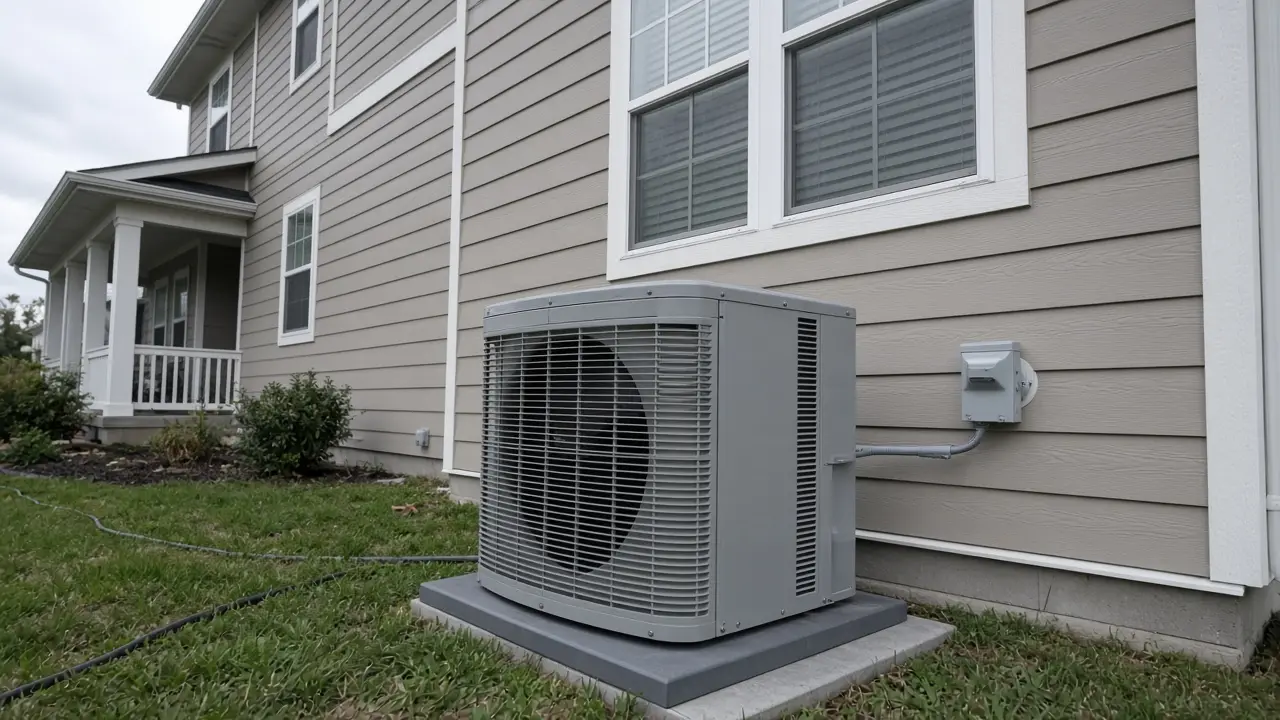
If you heat with electric baseboard, this is the easiest win in the whole heat pump decision. A heat pump delivers roughly three to four units of heat for every unit of electricity it draws. Baseboard delivers exactly one. Switching cuts the heating portion of your electricity use by about two thirds for the same warmth, on the same meter.
Why the gap is so large
Electric resistance heat, whether baseboard, an electric furnace or a wall heater, turns one unit of electricity into one unit of heat. It is 100 percent efficient and that sounds good until you realise it is the ceiling.
A heat pump does not make heat, it moves it. It uses electricity to gather heat from outside and concentrate it indoors, which is why it can deliver three to four units of heat per unit of electricity. That ratio, the coefficient of performance, is the entire reason the bill falls so far. You are buying the same comfort with a fraction of the kilowatt-hours.
The savings math
Suppose your baseboard heating runs a certain number of kilowatt-hours over a winter. A heat pump serving the same load at a seasonal efficiency of three to four uses roughly a third to a quarter of that electricity for the identical heat. The rate per kilowatt-hour does not change, because it is the same electric service. You simply use far less of it for heating.
On a home with a large winter electric bill, that is commonly the single biggest running-cost reduction available from any heating change, larger in percentage terms than switching off oil or propane. The operating cost page puts real state electricity prices behind the comparison.
The install is unusually clean
Homes with electric baseboard almost never have ducts, which sounds like a problem and is actually a convenience. A ductless mini split is the natural replacement:
- No duct work to add, so you avoid the biggest cost of a ducted retrofit.
- Room-by-room zoning you never had with baseboard.
- Air conditioning the baseboard never provided, from the same equipment.
You remove the baseboard load, add cooling, and gain zone control, all in one project.
Comfort and the cold
Sized correctly, a cold-climate heat pump keeps a baseboard-heated home just as warm, and backup resistance heat can cover the rare extreme cold snap. You are not trading comfort for efficiency here. You keep the warmth, add cooling, and cut the electricity used for heating by roughly two thirds.
When baseboard still has a place
Resistance heat is not useless. It makes sense as cheap backup inside a heat pump air handler, and for a small, rarely used space where a heat pump’s install cost would never be recovered. But for primary heating in any home with a real winter, the heat pump wins on running cost by a wide margin, and the switch usually adds cooling as a bonus.
Bottom line
Baseboard to heat pump is the cleanest, highest-return switch in this whole category. The efficiency gap is the largest, the install avoids ductwork, and you gain air conditioning in the process. See what it looks like for your home in the calculator, and read are heat pumps worth it for how the same logic applies to other fuels.
Written by HeatPumpAtlasUSA Editorial , reviewed by HeatPumpAtlasUSA Editorial , and updated . Sources are listed below. If a figure looks wrong, contact editorial.