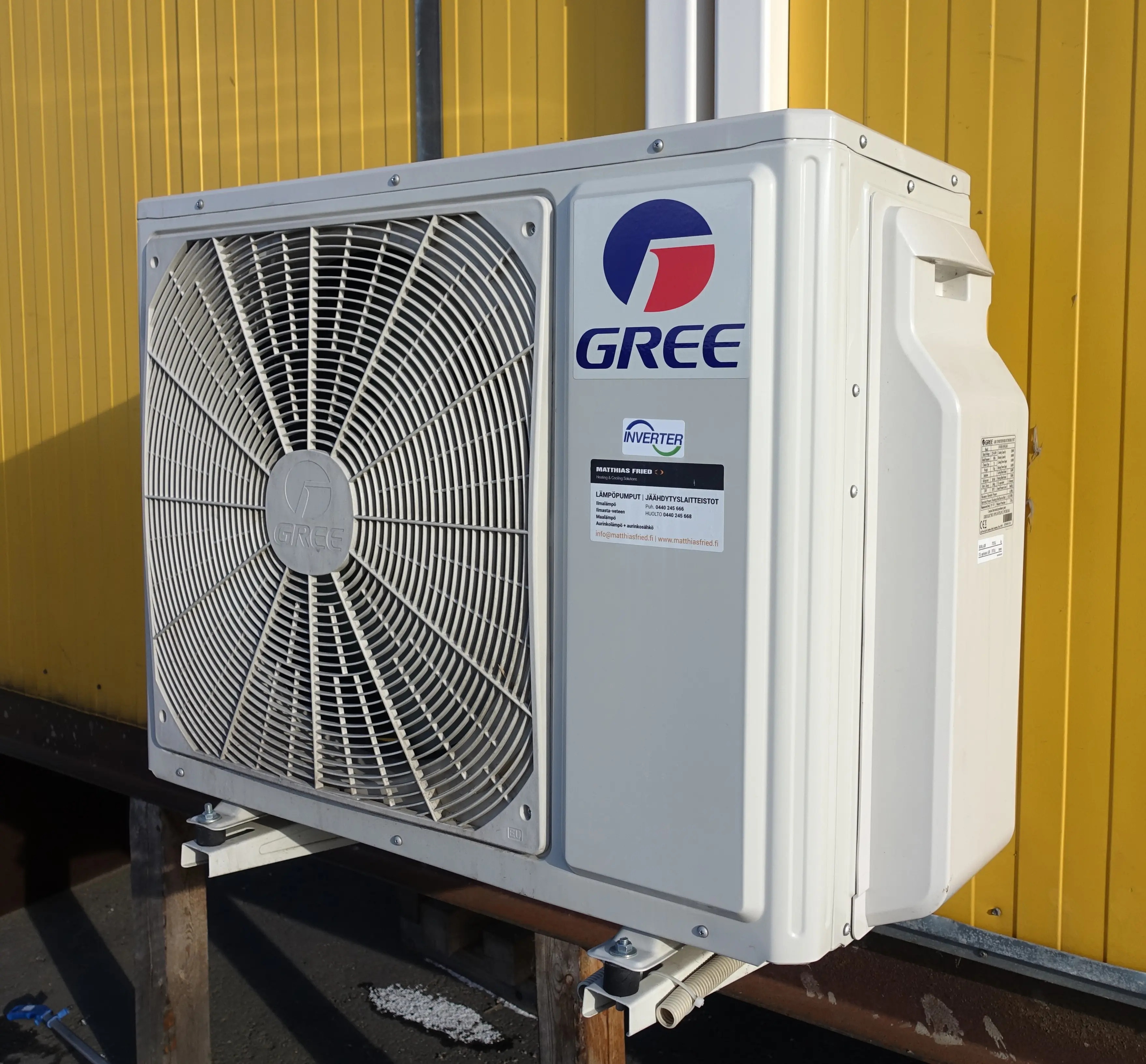
Do heat pumps work in cold weather? Yes. Modern cold-climate heat pumps keep heating well below freezing, and the best of them are rated to produce useful heat below zero Fahrenheit. The reputation for failing in the cold comes from older equipment and undersized installs, not from the physics of today’s units.
The more useful question is not whether they work, but how their capacity and efficiency change as it gets colder, and how to plan for the coldest hours of your year.
What actually happens as it gets colder
A heat pump gathers heat from outdoor air and concentrates it indoors. As the outdoor air gets colder, two things happen at once:
- Capacity falls. There is less heat energy in colder air, so the unit produces fewer BTUs per hour. A unit rated at 36,000 BTU at 47 degrees Fahrenheit might deliver noticeably less at 5 degrees.
- Efficiency falls. The coefficient of performance, the ratio of heat delivered to electricity used, drops as the temperature gap widens. A heat pump might move four units of heat per unit of electricity in mild weather and two in deep cold.
Both effects are gradual curves, not a switch that flips off. A cold-climate model is engineered so those curves stay useful much further down the thermometer than a standard unit.
Cold-climate models are a distinct category
Not every heat pump is built for a Minnesota January. The ones that are use variable-speed (inverter) compressors that ramp up in the cold, along with refrigerants and controls tuned for low-temperature operation. Look for a cold-climate designation and a published capacity at low outdoor temperatures, not just the headline rating at 47 degrees.
The US Department of Energy ran a Cold Climate Heat Pump Challenge specifically to push manufacturers to guarantee strong output at very low temperatures, and the resulting models perform in a way that surprises people who last looked at this equipment years ago.
The design point and backup heat
Sizing for the cold is about the design point: the outdoor temperature the system is engineered to cover on its own. Below that, backup heat fills the gap.
You do not size the heat pump to handle the single coldest hour of the decade, because that would make it oversized and inefficient for the entire rest of the season. Instead you size it for your typical cold and cover the rare extreme with backup:
- Electric resistance strips in the air handler, cheap to install and fine for a handful of hours a year.
- A retained furnace in a dual fuel arrangement, which can make economic sense in cheap-gas states.
Getting the size right is the single biggest factor in whether a cold-climate system feels effortless or marginal.
The winter bill is real, and manageable
Be honest about the deep cold: in the coldest weeks, heating demand rises and heat pump efficiency falls at the same time, so those are your highest-usage days. Averaged across the season the heat pump still delivers far more heat per unit of electricity than resistance heating, but the peak-week bill is real.
This is where the running-cost comparison matters. Against oil and propane, the heat pump wins the cold-weather bill outright. Against cheap natural gas, the coldest weeks are exactly when the furnace can be cheaper, which is the argument for dual fuel. The heat pump vs furnace comparison shows where that line sits by state.
Bottom line
Cold weather is not the obstacle it used to be. A cold-climate model, sized to your design temperature, with modest backup for the extremes, heats a home comfortably through a hard winter. The real decision is economic, not mechanical, and it turns on your fuel and your electricity price.
Model your winter in the calculator: it uses NOAA climate data for your ZIP, applies a cold-climate efficiency curve, and shows what the season actually costs to run.
Written by HeatPumpAtlasUSA Editorial , reviewed by HeatPumpAtlasUSA Editorial , and updated . Sources are listed below. If a figure looks wrong, contact editorial.